

Commodity farmers are trained not to become too excited about a price chart. Still, some numbers deserve attention. Organic yellow feed corn began the 2025/26 crop year at roughly $6.50 to $7 per bushel and had climbed to $13 to $15 by June, according to a Clarkson Grain merchandiser interviewed by Brownfield. In markets where a move of twenty cents can alter a planting or selling decision, “frothy” seems almost too restrained a word.
The broader numbers are equally striking. A recent farmdoc analysis of specialty corn and soybean markets found that organic feed corn commanded an average premium of $3.83 per bushel over the past two years. Organic food-grade yellow and white corn averaged $5.45 and $7.63 respectively, while organic soybeans averaged a premium of $10.58. Put 50,000 bushels of those soybeans in a bin and, on paper, the premium component alone is worth more than half a million dollars before counting the underlying commodity value.
Late-August evidence does not show those premiums fizzling out as harvest approaches. The USDA’s August 28 non-GMO report described corn and soybean premiums as steady, with food-grade soybean bids at $2.70 over November futures and western feed-grade bids ranging from $0.65 to $2 over. Across the border, the Organic Grain Hub’s August 25 snapshot put the median reported price for 2026 U.S. organic yellow feed corn delivered at C$15.90 per bushel, but its six observations ranged from C$13.13 to C$19.35. The spread may be more instructive than the midpoint: this is valuable grain in a fragmented and volatile market.
Frothy markets have a habit of attracting supply and eventually cooling down. That is not an argument against pursuing them. It is an argument for protecting the value while it exists. The premium is not a trophy awarded when the combine leaves the field. It remains a promise from a buyer, subject to the grain arriving with the identity, quality and condition that were contracted.
Earning the identity
Identity Preserved, or IP, is a wider category than organic. It can mean non-GMO soybeans destined for tofu, a particular food-grade corn hybrid, high-oleic soybeans, malting barley, seed grain, or another crop whose specific traits matter to the customer. As the U.S. Identity Preserved Alliance explains, the crop must remain separate through seed selection, planting, harvest, storage, transportation, processing and distribution.
That usually begins with a market and a contract before it begins with seed. The farmer may select from a narrower set of varieties, isolate fields, alter the chemical program, clean planters, combines, augers and trucks, maintain more detailed records and accept a more demanding delivery schedule. Depending on the crop and program, there may also be yield drag or additional weed-control costs. Interestingly, six years of Illinois farm data found no average yield penalty for non-GMO soybeans, while the estimated additional non-land cost was only about $15 per acre before the harder-to-measure burden of cleaning, segregation and storage. With premiums of $1 to $2 per bushel, the economics can still be compelling.
Canada offers a revealing indication of how material this value has become. Ontario’s Agricorp now insures 2026 IP tofu soybeans at C$3 per bushel above its conventional floating claim price and natto soybeans at C$5.75 above. A 60% of these premiums are state-sponsored. That is an unusually clear signal: the premium is now an insurable asset, and storage itself has a price.
The contract does not stop at harvest
Farmdoc correctly lists on-farm storage among the requirements that may accompany premium production. Delivery can be staggered across months, so the farmer must hold the crop until the buyer calls for it. The same analysis also notes the need for segregation and more thorough documentation. Yet there is a blind spot in how the industry normally thinks about this record: we document what the grain is, but often record surprisingly little about what happened to it while it waited.
A bin does not preserve grain merely by enclosing it. Stored grain is a biological inventory inside a thermodynamic system. Temperature differences move moisture through the mass. Warm or damp pockets encourage mould. Kernels, fungi and insects respire, consuming dry matter and producing carbon dioxide, heat and water; USDA research has shown how monitoring CO2 alongside temperature and humidity can reveal adverse storage conditions. An infestation can remain concentrated well away from the surface, while a moisture front can form beneath a roof that looks entirely uneventful from the inspection hatch.
This is where identity and condition begin to diverge. The paperwork may still say organic, non-GMO or food-grade. The grain itself may be losing test weight, germination, colour, dry matter or freedom from live insects. It can remain perfectly traceable while becoming less valuable.
Protecting both parts of the bushel
There are really two inventories in a grain bin: dry matter and permissible water. Dry matter is the crop that was grown. Moisture contributes to saleable weight, but only within the quality and storage limits of the contract. Good storage management protects both.
The dry-matter side is straightforward. Biological activity consumes the commodity. The widely used grain storability tables published by the University of Minnesota are based on limiting dry-matter loss to 0.5%. They show how sharply storage life changes with temperature: corn at 15% moisture has an estimated storage life of 16 months at 50 degrees Fahrenheit, but only 5.2 months at 70 degrees. A modest temperature difference can therefore turn the same grain from a long-duration asset into a near-term problem.
The moisture side is less intuitive. Farmers are rightly warned about storing grain too wet, but overdrying also gives away weight and consumes energy. Iowa State’s 2025 harvest guidance recommended storing corn intended for sale by early spring at 15.5% to 16.5% moisture, with suitable aeration, to minimize shrink while preserving quality. Grain held into summer should be drier because the biological risk rises. The target is therefore not “as dry as possible.” It is uniformly, safely and contractually dry enough for the intended storage period.
This distinction matters more when the bushel is worth $15 instead of $4! A 50,000-bushel bin valued at $15 per bushel contains $750,000 of inventory. One percent of avoidable weight loss represents $7,500, before energy cost or any quality discount. Fans that run by habit can overdry part of the mass; fans that run too little, or under the wrong ambient conditions, can leave warm and wet pockets untouched. The profitable decision is not simply fan on or fan off. It is when to run, for how long, under which weather conditions, and whether the desired cooling or drying front actually passed through the entire bin.
The premium has six-legged competitors
Insects add another asymmetry. The value is visible on the contract, while the threat can be invisible inside the grain. Cooling remains one of the most useful controls. A 2026 USDA Agricultural Research Service study found that population growth of the lesser grain borer varied with both temperature and commodity: populations thrived at 30 degrees Celsius, declined at 18 degrees and were strongly suppressed at 5 degrees. This does not mean every grain bin should become a refrigerator. It means temperature is an active pest-control variable, not merely a number to record.
For organic and low-chemical programs, the intervention set is narrower and the consequences of late detection are greater. Sanitation, segregation, cooling, early detection and, where suitable, controlled atmospheres become more important. Even when fumigation is permitted and necessary, precision matters: treatment should be driven by evidence of risk and verified against the concentration and exposure time needed to work, rather than applied by calendar and hope.
Australia, notably, is treating this as an export-market issue. In July, the Queensland Government and the Grains Research and Development Corporation announced a joint A$12 million post-harvest grain-protection project. Its objectives include faster insect detection, mapping incursions, identifying resistance and improving fumigation so growers can reduce reliance on contact insecticides. The commercial objective is explicit: grain free of insects and problematic chemical residues protects access to demanding markets.
From chain of custody to chain of condition
The IP industry has spent years building a chain of custody. It can show where a crop originated, which variety was planted, how it was handled and whether it remained segregated. The next step is a chain of condition: a continuous record of temperature, moisture, respiration (i.e. CO2), insect risk, aeration and treatment while that higher-value crop is stored.
That record should do more than populate another dashboard. It should help predict which part of the grain mass is changing, recommend or execute the right intervention, and show whether the result matched the prediction. It should protect dry matter without casually discarding permissible moisture. It should reduce chemical use without leaving the operator blind to a developing infestation. And when the grain is finally delivered, it should provide evidence that the premium survived the months between harvest and sale.
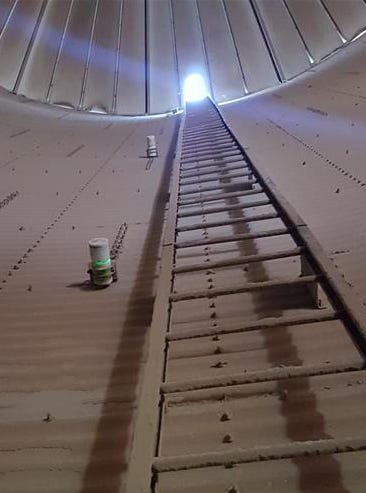
Identity preservation tells the buyer what the grain is. Condition preservation tells the buyer whether it is still worth what was promised. With today’s premiums, doing only the first half is becoming a very expensive habit.
If you grow, store or buy premium grain and think its post-harvest condition should become part of the contract, write me at sotiris at centaur dot ag. I’d be glad to compare notes.